|
Last year we participated in the first NJ Fibershed Barn Crawl. The Barn Crawl brings New Jersey fiber farmers and artisans together to showcase their farms and products, and to provide a fun way for fiber enthusiasts to visit the farms in person. Crawlers got to meet the sheep, alpacas and other farm animals, learn about farm life and fiber production, and purchase locally produced items. While the weather wasn't exactly perfect for the crawl (it was cold and rainy the first weekend and very hot the next weekend), we enjoyed visiting with fiber enthusiasts and are looking forward to the 2023 crawl. 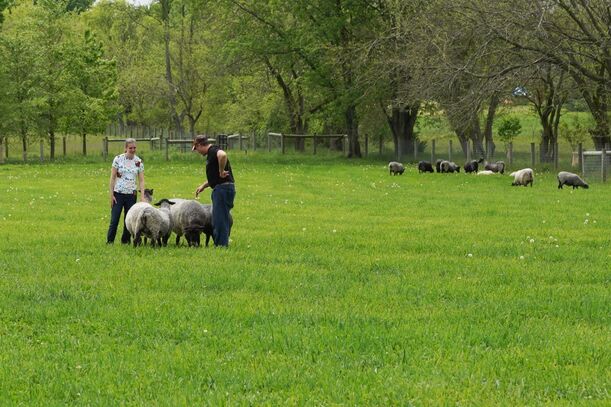 Visitors to the crawl got to walk through the pastures and visit the sheep while learning about our farming practices. 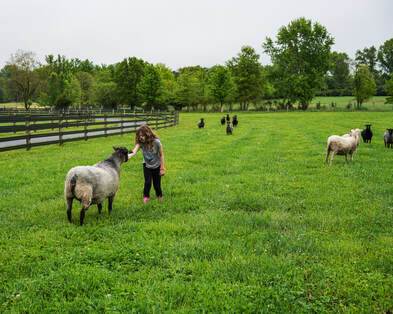 Making friends...
0 Comments
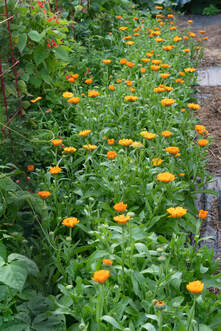
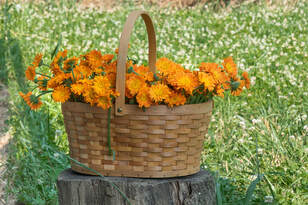
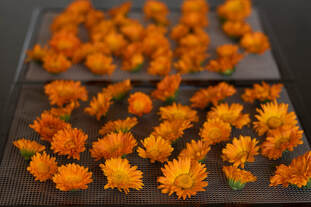
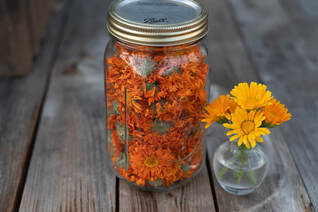
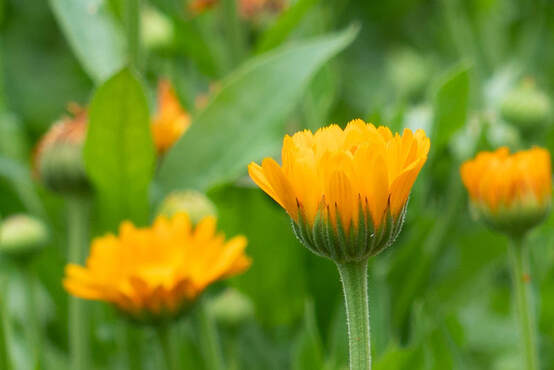 Calendula Flowers
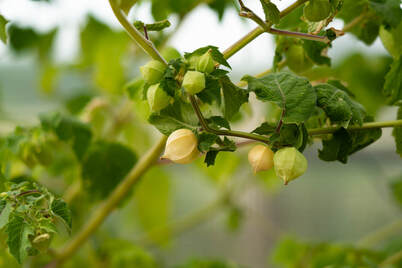 Ground cherries growing in our greenhouse, summer 2020 This week around the farm, we've been harvesting tomatoes, peppers, eggplants, and more, from our outside garden. In the greenhouse, we've been growing ground cherries in pots and they've been producing like crazy. Have you tried ground cherries? If not, you might be surprised at how easy they are to grow and how good they taste. Ground cherries are also called husk cherries or gooseberries. They are relatives of tomatoes, and look a little bit like very small tomatillos. The fruits are small and grow inside a paper husk. We started growing them a few years ago and enjoy having a few plants around in the summer - the fruits make great little snacks and if you gather enough of them, they make great pies, jams and tarts. Ground cherries are easy to grow. Start the seeds in early April, and your plants will be ready to plant out in the garden or in large pots by the middle of May. These are good plants for growing in pots. We have them growing in pots on a bench in our greenhouse so the fruits are easy to collect. The plants don't get very large, they will ramble a little bit, but you don't have to worry about them getting out of control. The little fruits are ready when the paper is dry and brownish, and they fall off the plant. 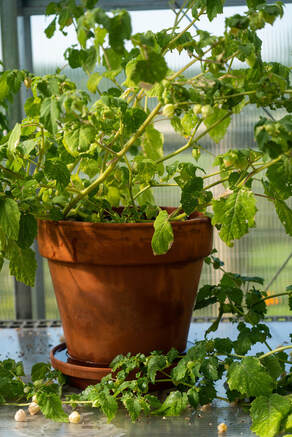 A ground cherry plant growing in a pot in the greenhouse. Growing your plants in a pot on a bench or on your deck will make it easier to harvest the fruits when they fall off the plant. Keep your plants well-fertilized and you should have a steady harvest of ground cherries throughout the summer. You'll have plenty of the tiny fruits - enough to make a pie or tart, or a small batch of jam. It takes a little bit of work to unwrap all of the fruits, but you'll be surprised at how delicious your ground cherry creation is - it's worth the effort! 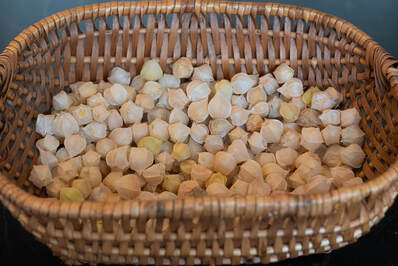 Ground cherries are harvested when the paper is dry and the fruits have fallen off the plant. 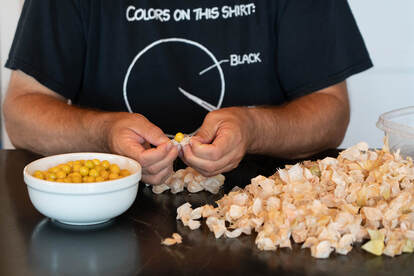 Peeling a batch of ground cherries for cooking. It's a little bit of extra work, but worth the effort! 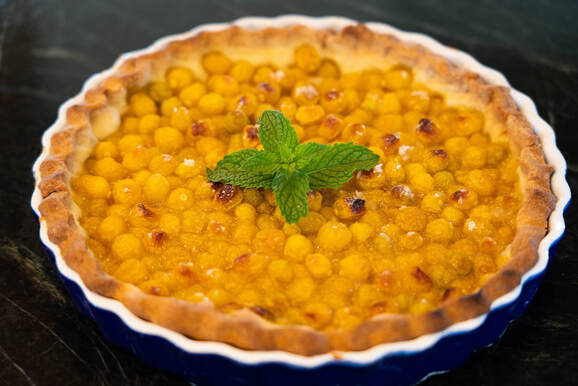 Super easy to make ground cherry tart - the flavor is delicious! It’s always exciting to bring a new sheep home to join our flock of Gotlands. But last month we had an especially exciting time when we traveled to New England on a whirlwind trip to Vermont Grand View Farm to pick up our newest farm family member, Kamila. Vermont is quite a long way, so we would normally make it a two-day trip, driving up one day, staying overnight and then driving home the next day. But this trip was scheduled during the Covid-19 pandemic, when pretty much everything was officially shut down. Hotels and restaurants were closed, and there was no way for us to stay overnight in Vermont. So we made the decision to drive up to New England and back to NJ in one day. We packed the van with food and water, some sheep supplies, and hand sanitizer, then headed out before dawn. We arrived by noon, said hello (with masks on) to Kim and Chuck Goodling, loaded Kamila into the van and drove (almost nonstop) home. It was a very long day for people and sheep alike, but all went well. Kamila handled it like a pro (of course, sheep don’t really have to worry about such things). After about a week of adjusting to her new home, Kamila joined the rest of the flock and is enjoying her new life. We're so glad to have her here, and we'll always remember our "pandemic trip" to pick her up. 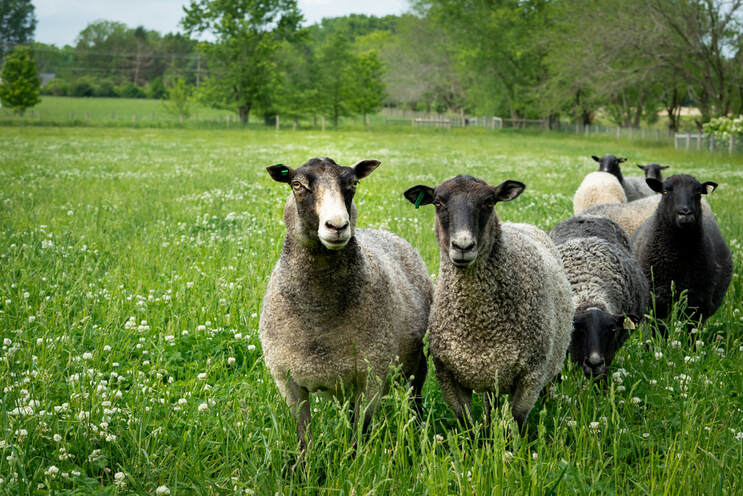 Kamila (L) with some of her new flock Sustainable Farming Practices on a Small Farm: Using Chickens to Help With Your No-Till Vegetables4/7/2020 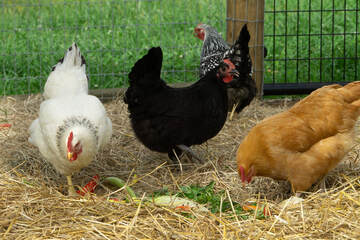 This week we completed spring cleanup in the vegetable garden. Much of the cleanup work in the vegetable garden in both the fall and the spring is actually performed by our egg laying hens. How can chickens help? 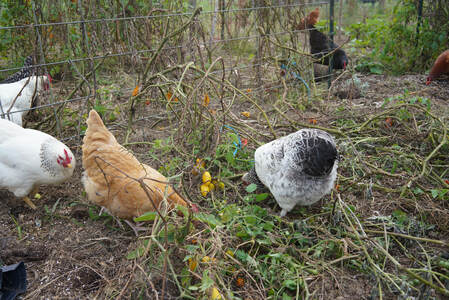 Hens working on the vegetable garden in the fall. They are eating vegetables, destroying weeds and helping old plant debris to be composted away. In the fall, after the vegetable harvest is complete and the plants are dying back, rather than pull plants by hand, we allow our flock of 30 laying hens access to the garden on a daily basis. The hens love to eat the vegetables that have fallen on the ground, they dig for worms and insects, and most importantly, they dig up the old vegetable plants and any weeds that have grown during the growing season. During the winter, when the weather allows, the chickens are turned out into the garden. It gives them something to do, and over the course of the winter, they complete their digging and eating of the residue from the summer. This hastens the process of composting the old plants, and the chickens will also work any composted material into the soil during this time. 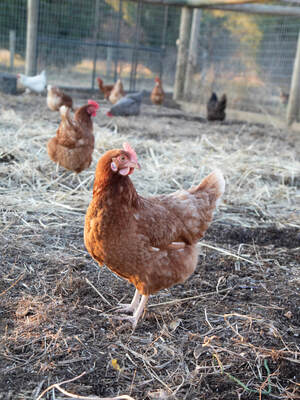 By late fall, the chickens have almost completed the cleanup. The remaining residue can be left over the winter. Their best work however, is done in the late winter/early spring. During this time, the hens are allowed daily access to the garden, where they continue to dig, scratch and eat. They are completing the cleanup of the garden while destroying any weeds that have started growing. This is especially important for controlling spring weeds. The result: by planting time, the garden has been completely cleaned up and is weed-free. All that remains to be done is to rake up any remaining large pieces of plant residue. If you grow a kitchen garden and keep laying hens, consider using your hens to help you with your garden cleanup in the fall and spring prep. You will save hours of work and importantly, you won't have to deal with weeds and with tilling in the spring to get your planting beds ready. If you are a vegetable producer, give chickens a try - you won't be disappointed! No-till vegetables, chemical free weed control, and all the while, you'll have fresh, delicious eggs to sell as well. And your vegetable beds will show the benefit of no tillage - retaining good soil structure, keeping earthworms and soil microorganisms happy, and most importantly, producing great-tasting, nutrient-dense vegetables. 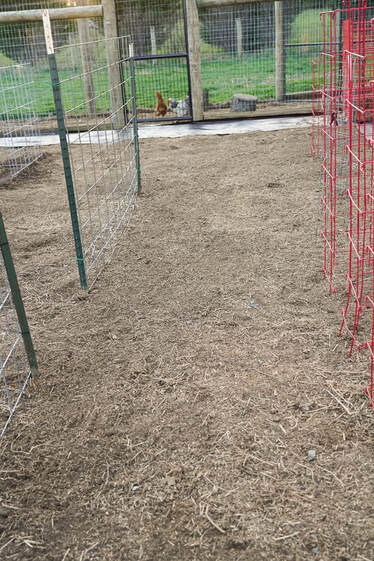 The vegetable garden is now ready for planting. Just rake up any remaining residue, then plant your seeds and vegetable starts. No need to till! |
Author
Laura Chandler Smiling Dog Farm Archives
February 2023
Categories |
 RSS Feed
|
Vertical Divider

|
© COPYRIGHT 2023. ALL RIGHTS RESERVED.
|